

The AI moment in accounting will follow a familiar pattern
Through every tech shift, from the personal computer to cloud computing, I’ve watched the same pattern repeat, writes John Munden.
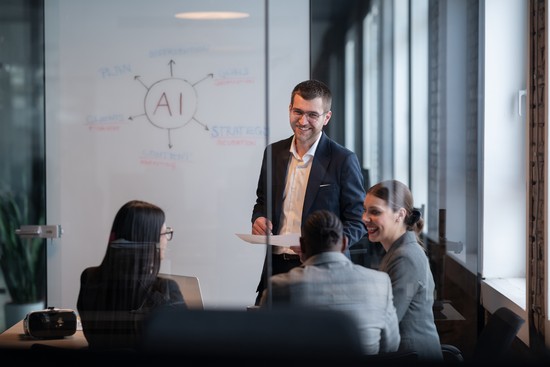
Through every tech shift, from the personal computer to cloud computing, I’ve watched the same pattern repeat, writes John Munden.
Each new technology arrives with predictions bold enough that half of them turn out to be wrong within two years, and each one eventually produces a transformation so large that almost nobody sees the full shape of it coming a decade later. I expect artificial intelligence to be no different.
In each case, the early forecasts were wrong mostly about timing, not substance. The personal computer did not simply replace the typewriter – it changed how organisations were structured and how decisions were made. The internet did not just add a communications channel – it rebuilt media, retail and banking from the ground up. Mobile technology did not just make the phone portable – it put a bank, a shop and an office in every pocket. Cloud computing did not just move the server somewhere else – it changed how software was bought, delivered and used, and helped transform accounting into a connected, real-time profession. None of these changes arrived on the schedule anyone predicted, and all of them ended up larger than anyone expected once they did.
In my view, accounting is now at the point mobile and cloud technology once were. There is genuine hype about artificial intelligence, some of it overblown, and there is a great deal of scepticism generated by early tools that make mistakes, pilots that stall, and productivity gains that disappoint on first contact. I don't think any of that is evidence the shift isn't happening. It is what every transition looks like in its unglamorous early years, before the pattern becomes obvious in hindsight.
The more useful question, I think, is not whether artificial intelligence will replace accountants, but which parts of the job change first. Technology tends to automate the simplest, most repetitive tasks before it touches anything else – data entry, categorisation, reconciliation, first-draft reports. That is a meaningful shift for any firm built around producing those outputs, but it is a long way from replacing the work altogether.
Some of the nervousness I hear in the profession is really about value rather than about software. When a client starts to associate a piece of work with the document that comes out the other end, rather than the expertise that sat behind it, the conversation about price gets harder. That is a genuine risk for any firm that describes its services purely as a list of outputs, and it is a reasonable thing for the profession to take seriously.
Picture a business owner who has always assumed she is paying her accountant for a spreadsheet, a return or a report. If a new tool can produce something that looks similar in seconds, she may reasonably start to wonder why the finished document costs what it does. That doesn't mean she stops trusting her accountant. It means the accountant now has to be clearer about what she is actually paying for – the judgement, the context and the accountability that never appeared on the invoice as a line item.
It is not, however, a reason to assume the work itself is disappearing. What does not get automated away is the part of the job that was never really about producing a document in the first place – understanding a client's situation well enough to ask the question they hadn't thought to ask, weighing up a decision before it is made rather than reporting on it afterwards, and being prepared to put a name to advice when the outcome actually matters. Clients have always been paying for that judgement as much as for the paperwork that came with it, even when the invoice never said so directly.
As good intelligence becomes cheaper and easier to access, I expect the market to place less value on producing an answer and more value on knowing whether that answer can be trusted. That shift favours firms and professionals who can show their work is grounded in real context, not just competent output. I see this as a genuine opportunity rather than only a threat: the firms willing to redesign how they work, rather than simply attaching new tools to old processes, are well placed to come out of this transition stronger than they went in.
This kind of change is not new, even if artificial intelligence makes it move faster. Plenty of professions have already been through a version of it, where a digital platform took over search, discovery or the simplest transactions, while the professional kept the relationship, the judgement and the responsibility for the outcome. The ones that adapted well did not try to compete with the platform on the parts it did better. They got clearer, instead, about the parts only a person could still be trusted to do.
One feature of this particular wave of change is worth noting. Earlier transitions needed new hardware, new networks or a slow migration of systems before anyone could really experiment. Artificial intelligence, by contrast, is arriving through software many businesses already have, running on infrastructure that already exists, with an interface almost anyone can pick up immediately. That doesn't remove the real organisational work involved – clean data, sensible controls, retrained staff and rebuilt workflows are all still required – but it does mean the gap between the quiet early years and the obvious later ones may close faster than it has in the past. Firms that wait for certainty before they start preparing may find there is less time than they think.
This is the environment I believe Cloudoffis is building its approach around. For accounting practices, working out where the technology genuinely changes the job, where it does not, and how to adapt without losing what clients actually value them for, is a far more useful conversation than debating whether the profession will survive. It generally will. The more important question, for any individual firm, is what it will look like on the other side, and whether it used the slower early years to prepare rather than waiting for the picture to become obvious to everyone at once.
History suggests the next few years will disappoint the most enthusiastic predictions about artificial intelligence, and the decade after that will exceed them. In my experience, the firms that use the quieter period in between well are usually the ones that come out ahead. That has been true of every technology transition I have watched unfold. There is little reason to expect this one to be different.
John Munden is the chief strategy officer at Cloudoffis.
By: John Munden | 17 September 2026 | accountantsdaily.com.au
Hot Issues
- Write a business plan
- Two Cautionary Tales About Resources Important to Anyone Using a Domain Name or Website
- What Are the Privacy Policy Requirements for Australian E-Commerce Businesses?
- Privacy Compliance Sweep 2026: Is Your Business Ready?
- Foreign investor fined $370k as ATO cracks whip on land banking
- The AI moment in accounting will follow a familiar pattern
- Latest Intergenerational Report points to stubborn productivity issues that AI cannot fix
- Check out the smartest species on earth: Data from 200M BC to 2026
- Steps to close a business
- Paid parental leave super contributions have started
- How Do I Write Legally Compliant Terms and Conditions for My Business?
- Don’t get caught out at tax time with your multiple jobs
- Division 296 tax on large super balances
- More of the same with latest missive from Treasury
- 'No place to hide': ATO puts contractors on notice over $1bn in missing TPAR payments
- Check out the largest castles by country
- ATO no longer treating debt the same as during COVID
- Warning for early lodger this tax time!
- Global companies turn to cost-cutting amid ongoing inflation
- Don’t get caught out at tax time with your multiples jobs
- Does Your Small Business Need to Follow AML Privacy Rules?
- SMEs warned as ATO ramps up tax debt collection
- Taxpayer given 35% penalty for BAS recklessness
- How Our Diets have Changed.
- Tips to help you this tax time
- Tax Time Checklists Individuals; Company; Trust; Partnership; and Super Funds
- ATO warns millions of Australian chasing tax deductions to stop making 'unusual' claims
- Impersonation scams are on the rise
- Components of a cyber security plan
- Social Security Payments and Their Effect on Discretionary Trusts
- LRBA ban no better for housing supply or retirement, accountants clap back
- The evolution of the world's languages
Article archive
- April - June 2026
- January - March 2026
- October - December 2025
- July - September 2025
- April - June 2025
- January - March 2025
- October - December 2024
- July - September 2024
- April - June 2024
- January - March 2024
- October - December 2023
- July - September 2023
- April - June 2023
- January - March 2023
- October - December 2022